

You finally fill that prescription your doctor wrote. Two hours later, your skin is on fire, your stomach is in knots, or your throat feels tight. The medication is supposed to help you, but your body is treating it like an enemy. For thousands of patients, this is not a rare side effect. It is what happens every time they pick up a standard, mass-produced medication.
If you have ever read a drug label and wondered why there are seven ingredients you cannot pronounce alongside the one your doctor prescribed, this article is for you. Those extra ingredients are often the real problem, and a compounding pharmacy can solve it.
The Hidden Problem: Fillers, Dyes, and Binders You Never Asked For
Commercial drug manufacturers produce medications in massive batches. To make a pill stable, colorful, and shelf-ready, they add inactive ingredients called excipients. These can include:
- Lactose which can be a problem for the lactose-intolerant
- Gluten and wheat starch, a serious issue for celiac patients
- Casein which is a milk protein that triggers dairy allergies
- Artificial dyes like Red 40 and Yellow 5
- Corn-based fillers
- Preservatives such as parabens and sulfites
- Gelatin that can turn problematic for vegetarian, vegan, or kosher patients
The active ingredient may be exactly what your body needs, but if it arrives wrapped in something your immune system rejects, the prescription fails before it ever has a chance to work.
Why a Standard Pharmacy Cannot Solve This Problem
A retail pharmacy is essentially a distribution point. The pharmacist counts pills, verifies dosages, and hands you a sealed bottle from the manufacturer. They cannot remove a dye, swap out lactose for a hypoallergenic base, or change a tablet into a liquid because you have trouble swallowing.
When a patient has an allergy or sensitivity, standard pharmacies typically offer one of three responses: try a different brand and hope it has different fillers, call the doctor for an alternative, or simply suffer through the side effects. None of those is real medicine. They are workarounds.
What a Compounding Pharmacy Actually Does Differently
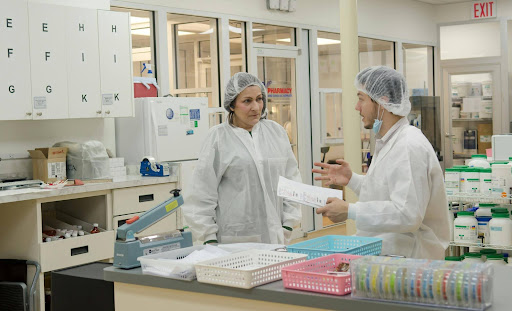
Compounding is the practice of creating a medication from raw, individual ingredients in a laboratory setting, mixed precisely for one specific patient. This means a licensed pharmacist starts from the active pharmaceutical ingredient and builds the medication around your body, not the other way around.
Custom Formulations Without the Allergens
If you react to gluten, the formulation is built gluten-free. If dyes cause migraines, the medication comes uncolored. Need a dye-free, preservative-free, casein-free version of something your child has been struggling with? That is the routine work of a compounding lab.
Dosage Forms Built Around You
Some patients cannot swallow capsules. Others absorb medication poorly through the gut. A compounding pharmacist can convert a pill into a transdermal cream, a sublingual drop, a flavored liquid, or a lozenge. The active ingredient stays the same. The delivery becomes something your body can actually tolerate.
Strengths Your Body Actually Needs
Mass-produced medications come in fixed doses, usually two or three options. If you need a dose that sits between those numbers, you are stuck splitting pills or taking too much. Compounded medications are made at the exact strength your provider prescribes.
When Compounding Becomes Essential, Not Optional
Certain patient groups simply cannot use off-the-shelf medications safely:
- Patients on hormone replacement therapy. Hormone replacement is one of the most common reasons people turn to compounding, because every patient’s hormone levels are different and one-size-fits-all dosing rarely produces good results.
- Pediatric patients who need lower doses, flavored liquids, or dye-free formulas.
- Geriatric patients with multiple sensitivities and swallowing difficulties.
- Patients with autoimmune conditions like celiac disease or eosinophilic esophagitis.
- Cancer patients whose treatment side effects make standard formulations intolerable.
The Role of a Personalized Pharmacy Consultation
The starting point is always conversation. A personalized pharmacy consultation walks through your full medication history, every reaction you have had, every ingredient you suspect, and every goal your provider has for your treatment. The pharmacist then collaborates with your doctor to design a formulation that removes the triggers and keeps the therapeutic benefit. This is not a vending-machine transaction. It is medicine practiced the way it was meant to be.
What This Costs You to Ignore
Patients who push through allergic reactions and sensitivities often end up in emergency rooms, on additional medications to manage side effects, or quietly skipping doses. The cost of staying with a standard pharmacy is rarely just discomfort. It is unmanaged conditions, repeated reactions, and a treatment plan that never quite works.
If you have been switching brands, splitting pills, or simply enduring reactions, you do not have to keep doing that. Contact King’s Compounding Pharmacy in Amarillo to schedule a consultation and find out exactly which of your medications can be reformulated to work with your body, not against it.
Frequently Asked Questions
Is a compounded medication as safe as a commercial one?
Yes, when prepared by a licensed compounding pharmacy using PCCA-certified ingredients and following USP standards. Compounded medications are made under strict quality controls and are tailored to a specific prescription from your provider.
Do I need a different prescription to use a compounding pharmacy?
Your existing prescription can usually be transferred. Your doctor may need to write specific instructions about the formulation, dosage form, or excluded ingredients, but most providers in Amarillo are familiar with this process.
Does insurance cover compounded medications?
Coverage varies by plan and medication. Some compounded prescriptions are covered, while others are paid out of pocket. The pharmacy team can help you understand what to expect before any medication is prepared.
How long does it take to get a compounded prescription filled?
Most compounded medications are ready within 24 to 48 hours, depending on the complexity of the formulation. Sterile compounds and specialized preparations may take slightly longer.
What medications are most commonly compounded?
The most common compounded medications include customized pain creams, hormone replacement therapies (HRT), weight-loss injections (semaglutide/tirzepatide), and liquid suspensions for children. These medications are modified to remove allergens, change dosages, or create easier-to-take forms like creams, gels, or liquids.