

You are dealing with hot flashes, low energy, mood swings, or weight that will not budge, and you have heard bioidentical hormones might help. Then your provider hands you a list of lab tests, and suddenly you are staring at names you do not recognize. Which ones do you actually need, and why are there so many? Whether you start with a bioidentical hormones clinic or your regular provider, lab work almost always comes first. Knowing what each test checks for and what it tells your provider takes the guesswork out of starting BHRT and helps you walk into your first appointment ready with the right questions.
Why You Need Lab Work Before Bioidentical Hormones
Starting bioidentical hormone therapy without testing is like adjusting a recipe you have never tasted. Lab work gives your provider a baseline picture of your current hormone levels, flags any safety concerns, and shapes a dose that actually fits your body. Two people with the same symptoms may need very different treatments, and only testing can tell them apart. Skipping this step is what turns a careful plan into a guess, which is why most providers will not write a prescription until your results are back.
The Core Hormone Tests You Actually Need
Estradiol
Estradiol is the main form of estrogen your provider measures. It shows how much estrogen your body is producing and how far your levels have dropped, which guides whether you need replacement and how much.
Progesterone
Progesterone is checked alongside estrogen because the two work as a pair. The balance between them affects symptoms like poor sleep, anxiety, and irregular cycles, so your provider needs both numbers to set a safe ratio.
Testosterone
Testosterone is not just a male hormone. In women, low testosterone can drag down energy, libido, and muscle tone. Testing tells your provider whether it belongs in your plan or whether your symptoms point elsewhere.
FSH
Follicle-stimulating hormone, or FSH, helps confirm where you are in the menopause transition. It is especially useful if you are under 45 or your symptoms are unclear, since a high reading can point to early menopause rather than another cause.
The Tests That Check Whether BHRT Is Safe for You
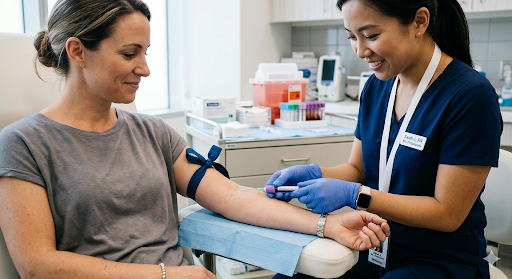
Thyroid Panel
A thyroid running slow can cause fatigue, weight gain, and brain fog, the same symptoms often blamed on hormones. A thyroid panel rules that out, so you treat the real cause instead of masking it.
Complete Blood Count
A CBC screens your red and white blood cells and platelets for anemia or clotting concerns before you start hormone therapy, since some hormone therapies can affect clotting risk.
Liver and Kidney Function
Your liver and kidneys process hormones and clear them from your body. Confirming they are working properly ensures your system can handle therapy safely from the start.
Tests Based on Your Age and Health History
Beyond hormones, your provider may add a few checks based on your history. A lipid panel and a blood sugar test give a quick snapshot of your heart and metabolic health. Age-appropriate screenings like a mammogram matter because estrogen can affect breast tissue, so anything unusual should be looked at first. Your provider may also check your vitamin D levels, since it supports bone health when estrogen levels fall. These are not busywork. They confirm that hormone therapy is a safe fit for you specifically, not just for your symptoms on paper.
How a Personalized Pharmacy Consultation Fits In
Once your provider has your results and writes a prescription, a compounding pharmacy comes in. We take your prescribed hormones and prepare them in the exact strength and form your provider ordered, whether that is a cream, a capsule, or a pellet. A personalized pharmacy consultation helps you understand how to use your BHRT, how to store it, and what to watch for as your body adjusts. For BHRT therapy in Amarillo, TX, that handoff between your provider and your pharmacist is what keeps your treatment accurate, consistent, and easy to stay on.
Getting Started With BHRT the Right Way
The right lab tests turn bioidentical hormones from a shot in the dark into a treatment built around your body. Start by talking with your provider about which of these tests fit your situation. Once you have a prescription, bring it to King’s Compounding Pharmacy in Amarillo, and we will prepare your hormones to match exactly what your provider ordered.
Frequently Asked Question
Do I really need blood tests before starting bioidentical hormones?
In most cases, yes, because testing sets your baseline and confirms therapy is safe. For typical menopause at the usual age, some providers diagnose based on symptoms alone, but testing still helps personalize your dose.
Is saliva testing accurate for measuring hormone levels?
Blood testing is the more established method. The accuracy of saliva testing has not been firmly proven, so ask your provider which method they trust for your treatment decisions.
How often will I need lab tests once I start BHRT?
Many providers re-test around six weeks and again a few months in, then yearly while you stay on therapy. The follow-ups let your provider fine-tune your dose.
Can a compounding pharmacy order my lab tests?
No. Your provider orders the labs and writes the prescription. The pharmacy compounds your hormones to match your provider’s prescription.