
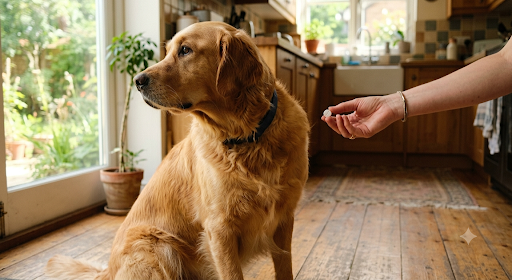
Your cat sees the pill bottle and disappears under the bed. Your dog spits the tablet out no matter how much peanut butter you wrap it in. Twice a day, this turns into a wrestling match, and you’re left wondering if your pet is even getting the full dose. If medication time has become a fight in your house, the problem usually isn’t your pet being difficult. It’s the medication not being built for them in the first place. Compounded pet medications in Amarillo solve exactly this problem, giving your vet a way to make treatment fit your pet instead of the other way around.
Why Standard Pet Medications Don’t Always Work
Most commercial pet medications are made for the dog or cat, in one strength, one flavor, one form. But pets vary wildly in size, taste preference, and tolerance for pills. A tablet sized for a 60-pound Labrador is wrong for a 6-pound cat. A bitter-tasting drug that works fine crushed into food for one dog gets immediately detected and rejected by another.
A few common reasons medication time turns into a battle:
- The pill is too large or too bitter for your pet to swallow comfortably
- The commercial dose doesn’t match your pet’s exact weight or size
- Your pet has an allergy or sensitivity to a filler, dye, or inactive ingredient
- The medication your vet needs is discontinued or temporarily out of stock
- Your pet simply refuses anything hidden in food, no matter the trick
When any of these show up, missed doses and stopped treatments tend to follow, even with the most patient pet owner.
What Custom Compounding Actually Changes
Animal drug compounding doesn’t alter the active ingredient’s effectiveness. It changes the delivery method so the medication fits the patient, not the other way around. Here’s what that can look like in practice.
Flavor and Format Adjustments
- Flavored liquids for cats and dogs who fight pills but tolerate a syringe of chicken or tuna-flavored suspension
- Chewable treats that disguise medication as a reward
- Transdermal gels applied to the inner ear, useful for cats who resist oral dosing entirely
- Miniaturized capsules for small breeds or exotic pets who can’t handle standard tablet sizes
Custom Injectable Medications
Some pets simply cannot tolerate oral medication, whether due to nausea, behavioral resistance, or a medical condition that limits absorption. In these cases, custom injectable medications offer a reliable alternative. Compounding pharmacists can prepare sterile injectable formulations at concentrations and volumes suited to a specific pet, something a standard commercial vial often can’t offer.
Dosage Precision
Standard commercial medications are often made for average human or large-animal doses. A 6-pound cat and a 90-pound dog have very different needs, and compounding allows a pharmacist to calculate exact dosing based on your pet’s actual weight and condition.
Common Pet Medications That Get Compounded
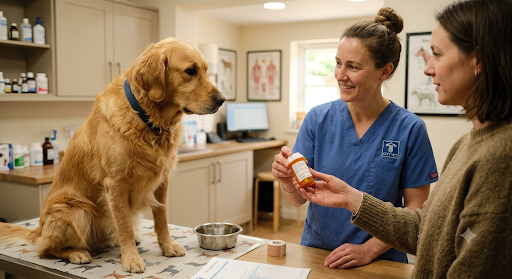
Some of the most frequently reformulated pet prescriptions include:
- Thyroid medication for cats, often compounded into a flavored liquid or transdermal gel
- Anti-seizure medication for dogs that need a precise, weight-based dose
- Pain management medications following surgery or for chronic joint conditions
- Antibiotics that come only in bitter-tasting standard tablets
- Medications for pets with allergies to dyes, fillers, or other inactive ingredients
Compounding vs. Standard Prescriptions: A Quick Comparison
| Factor | Standard Prescription | Compounded Medication |
| Flavor options | Fixed, often unflavored | Customizable (chicken, fish, beef) |
| Dosage size | Standard tablet/capsule sizes | Tailored to pet’s exact weight |
| Delivery form | Usually oral only | Liquid, chew, gel, or injectable |
| Best for | Pets who take pills easily | Resistant, small, or sensitive pets |
| Ingredient adjustments | Not typically available | Allergen removal possible |
Is Compounded Medication Safe for My Pet?
Compounded medications are prepared under a licensed veterinarian’s prescription and made by a state-licensed pharmacy, but it’s worth knowing they aren’t FDA-approved in the same way commercial drugs are. That means there’s no independent verification of potency or stability the way there is with a manufactured product. This is exactly why the pharmacy preparing it matters. Working with a pet medication compounding pharmacy that follows established quality standards makes the difference between a formulation that works and one that doesn’t.
Key Takeaways
- Nearly 4 in 10 cat owners report medication noncompliance, often due to a resistant pet
- Compounding can turn pills into flavored liquids, chews, or transdermal gels
- Dosage can be customized to your pet’s exact weight, not just standard sizes
- Custom injectable medications help when oral dosing isn’t tolerated
- A personalized pharmacy consultation helps match the right form to your pet’s needs
Make Medication Time Easier for Your Pet
Fighting with your pet over medication twice a day isn’t sustainable, and it isn’t necessary. If your veterinarian has prescribed something your pet won’t take, contact King’s Compounding Pharmacy in Amarillo. Bring your pet’s prescription, and we’ll walk you through a flavored, sized, or reformulated version built around your pet.
Frequently Answered Questions
Is compounded medication safe for pets?
Yes, when prepared by a licensed compounding pharmacy following proper sterile and quality standards. Compounding pharmacists work directly with your veterinarian to ensure the formulation, dose, and ingredients are appropriate for your specific pet.
What is a compounded pet medication?
Animal drug compounding is the process of combining, mixing, or altering ingredients to create a medication tailored to the needs of an individual animal or a small group of animals, and these drugs can play a critical role in veterinary medicine.
Does my vet need to be involved for pet compounding medication?
Compounded medications require a prescription from a licensed veterinarian. A pharmacy can’t compound a pet medication without that prescription in hand.
Will my pet’s insurance cover compounded medications?
Coverage varies by provider and policy, since compounded medications aren’t FDA-approved the way commercial drugs are. It’s worth checking with your pet insurance provider directly before assuming coverage.
How long does it take to get a compounded medication ready for my pet?
Turnaround depends on the formulation and ingredients needed, but many common preparations like flavored liquids or chews can be ready within a few business days of receiving the prescription.